Rene Hoeijmakers
June 16, 2026
New International Partnership to Explore Wastewater Resources for the Built Environment
A new global cross-sector partnership between domain experts, utilities and academic institutions has been established to investigate and assess the potential of transforming wastewater treatment by-products into materials for the built environment. The project is funded by the Ramboll Foundation – and the project team is actively looking for industry partners to join and help bring this to scale.
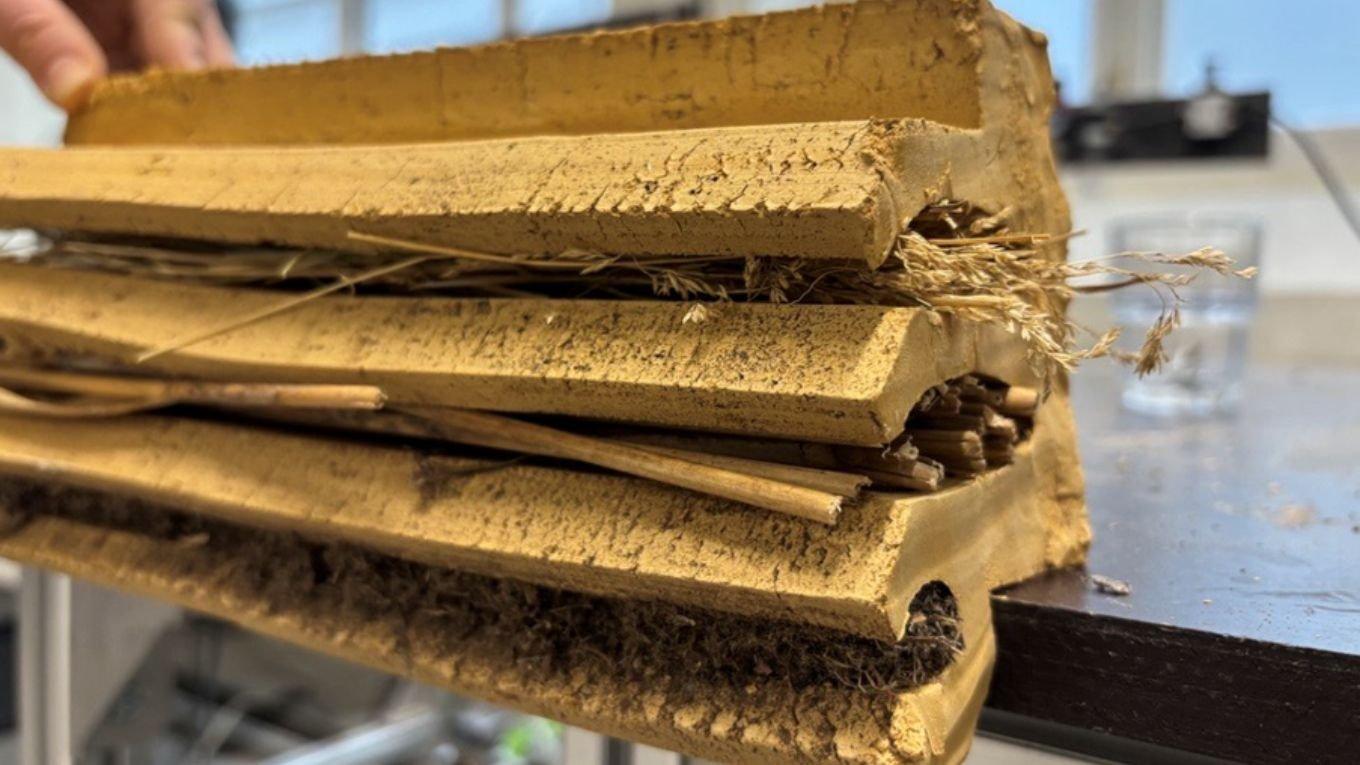
The collaboration brings together expertise from across the wastewater, construction and university sectors to explore how bio-based raw materials derived from residual sludge and sediment generated during wastewater purification can be utilised as feedstock for low-carbon, circular building materials. The project team includes Ramboll (consultant), Henning Larsen (architect), Royal Danish Academy and University of Canberra.
The ambition is to redefine wastewater treatment plants as resource hubs that contribute to a circular bioeconomy and the decarbonisation of the built environment – and, eventually, to bring sludge into the built environment as a feasible, scalable material solution.
“The partnership builds on a previously funded scoping study that established the viability of using granular sludge sourced from wastewater treatment as a building material through experimental prototyping and design-led research. The study demonstrated the potential of sludge-clay composites and identified opportunities for further development,” says René Hoeijmakers.
Looking for industry partners
Moving beyond this initial work, the new collaboration will expand the range of applications under investigation and broaden engagement across industry and academia. The project will help establish the foundations for a long-term international research partnership exploring additional architectural applications, including boards, fire-retardant materials, as well as broader circularity and biodiversity potentials. At this stage, the team is also actively looking for manufacturing partners to join and help bring this to scale.
The project is structured around three integrated activities: delegation visits that create connections, generate insights and catalyse larger-scale research initiatives; outreach activities designed to grow partnerships across industry and academia; and the consolidation of knowledge, opportunities and stakeholder networks throughout the wastewater value chain.
Addressing a Growing Global Resource Challenge
Wastewater treatment plants generate substantial volumes of sludge during processing operations. Globally, between 53 and 75 million tonnes of sludge are produced annually. In Australia, approximately 372,000 tonnes are generated each year, with 6% still directed to landfill. Denmark produces around 140,000 tonnes annually, with 15% deposited to landfill and 25% incinerated. As urbanisation continues and wastewater treatment capacity expands worldwide, these volumes are expected to increase.
While some established pathways for wastewater sludge utilisation exist, particularly in agriculture, significant quantities remain underutilised. At present, there are no established applications of wastewater sludge in the built environment.
At the same time, wastewater treatment facilities represent a globally abundant and growing source of material that is generated and available at a local scale.
Supporting the Transition to a Circular Bioeconomy
Staying within planetary boundaries and achieving a net-zero carbon future depends on the decarbonisation of buildings. However, this cannot be achieved using conventional building materials alone. It requires a shift away from a fossil-based, non-renewable and extractive economy towards a circular bioeconomy within the construction sector. Making this transition is critical to achieving the objectives of the Paris Agreement and the 2030 Agenda for Sustainable Development.
By sourcing building materials from local renewable resources, new value chains can be created that support both local economies and global sustainability goals. Such approaches have the potential to address growing raw material demand driven by rapid urbanisation while reducing the carbon footprint of cities.
Through this project, the partners aim to explore how wastewater treatment residues can be transformed from an underutilised waste stream into valuable and functional architectural materials, reframing them as local resources rather than liabilities and creating new value within wastewater treatment systems.
Project/Research Team
University of Canberra: Prof Tim Schork
Royal Danish Academy: Associate Prof Paul Nicholas
Henning Larsen Architects: Jakob B. Strømann-Andersen
Ramboll: Lone A. Clowes & Rene Hoeijmakers
Funder
The Ramboll Foundation
Project duration
01/06/2026 – 31/05/2027
Want to know more?
René Hoeijmakers
Global Service Line Director, Water & Wastewater Treatment
+31 6 83191061